Environmental issues and how to great awareness and impower students to become responsible global citizens.
There are many environmental issues that we face today. Here are some of the biggest environmental problems of our lifetime 1:
9. Ocean Acidification
Global temperature rise has not only affected the surface, but it is the main cause of ocean acidification. Our oceans absorb about 30% of carbon dioxide that is released into the Earth’s atmosphere. As higher concentrations of carbon emissions are released thanks to human activities such as burning fossil fuels as well as effects of global climate change such as increased rates of wildfires, so do the amount of carbon dioxide that is absorbed back into the sea.
The smallest change in the pH scale can have a significant impact on the acidity of the ocean. Ocean acidification has devastating impacts on marine ecosystems and species, its food webs, and provoke irreversible changes in habitat quality. Once pH levels reach too low, marine organisms such as oysters, their shells and skeleton could even start to dissolve.
However, one of the biggest environmental problems from ocean acidification is coral bleaching and subsequent coral reef loss. This is a phenomenon that occurs when rising ocean temperatures disrupt the symbiotic relationship between the reefs and algae that lives within it, driving away the algae and causing coral reefs to lose their natural vibrant colours. Some scientists have estimated coral reefs are at risk of being completely wiped by 2050. Higher acidity in the ocean would obstruct coral reef systems’ ability to rebuild their exoskeletons and recover from these coral bleaching events.
Some studies have also found that ocean acidification can be linked as one of the effects of plastic pollution in the ocean. The accumulating bacteria and microorganisms derived from plastic garbage dumped in the ocean to damage marine ecosystems and contribute towards coral bleaching.
10. Agriculture
Studies have shown that the global food system is responsible for up to one third of all human-caused greenhouse gas emissions, of which 30% comes from livestock and fisheries. Crop production releases greenhouse gases such as nitrous oxide through the use of fertilisers.
60% of the world’s agricultural area is dedicated to cattle ranching, although it only makes up 24% of global meat consumption.
Agriculture not only covers a vast amount of land, but it also consumes a vast amount of freshwater, another one of the biggest environmental problems on this list. While arable lands and grazing pastures cover one-third of Earth’s land surfaces, they consume three-quarters of the world’s limited freshwater resources.
Scientists and environmentalists have continuously warned that we need to rethink our current food system; switching to a more plant-based diet would dramatically reduce the carbon footprint of the conventional agriculture industry.
11. Food and Water Insecurity
Rising temperatures and unsustainable farming practices has resulted in the increasing threat of water and food insecurity and taking the mantle as one of the biggest environmental problems today.
Globally, more than 68 billion tonnes of top-soil is eroded every year at a rate 100 times faster than it can naturally be replenished. Laden with biocides and fertiliser, the soil ends up in waterways where it contaminates drinking water and protected areas downstream.
Furthermore, exposed and lifeless soil is more vulnerable to wind and water erosion due to lack of root and mycelium systems that hold it together. A key contributor to soil erosion is over-tilling: although it increases productivity in the short-term by mixing in surface nutrients (e.g. fertiliser), tilling is physically destructive to the soil’s structure and in the long-term leads to soil compaction, loss of fertility and surface crust formation that worsens topsoil erosion.
With the global population expected to reach 9 billion people by mid-century, the Food and Agriculture Organization of the United Nations (FAO) projects that global food demand may increase by 70% by 2050. Around the world, more than 820 million people do not get enough to eat.
The UN secretary-general António Guterres says, “Unless immediate action is taken, it is increasingly clear that there is an impending global food security emergency that could have long term impacts on hundreds of millions of adults and children.” He urged for countries to rethink their food systems and encouraged more sustainable farming practices.
In terms of water security, only 3% of the world’s water is fresh water, and two-thirds of that is tucked away in frozen glaciers or otherwise unavailable for our use. As a result, some 1.1 billion people worldwide lack access to water, and a total of 2.7 billion find water scarce for at least one month of the year. By 2025, two-thirds of the world’s population may face water shortages.
12. Fast Fashion and Textile Waste
The global demand for fashion and clothing has risen at an unprecedented rate that the fashion industry now accounts for 10% of global carbon emissions, becoming one of the biggest environmental problems of our time. Fashion alone produces more greenhouse gas emissions than both the aviation and shipping sectors combined, and nearly 20% of global wastewater, or around 93 billion cubic metres from textile dyeing, according to the UN Environment Programme.
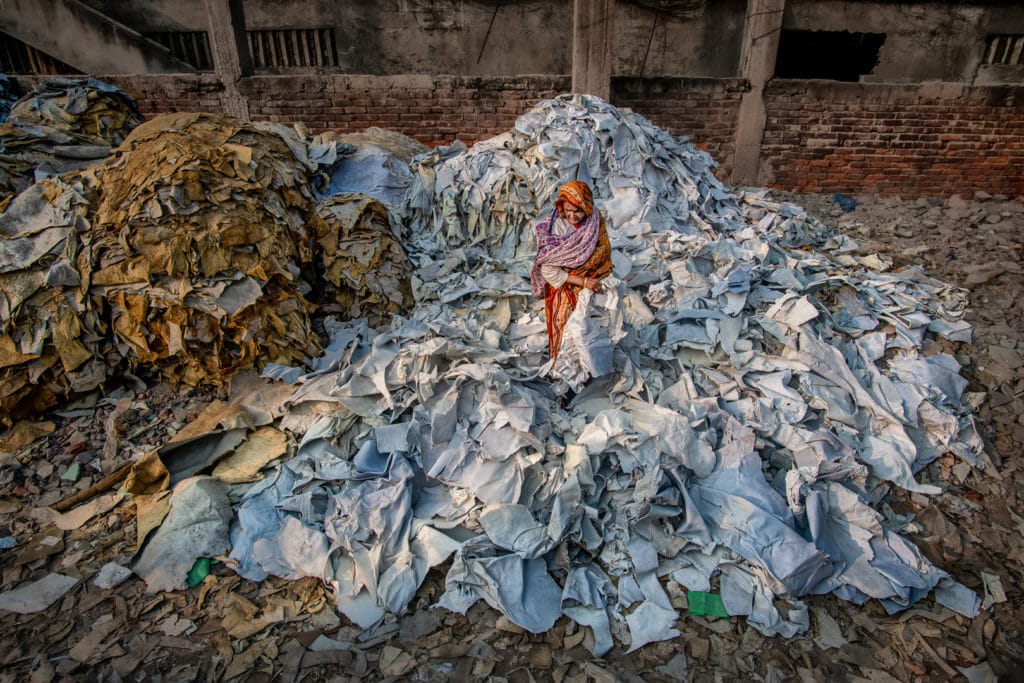
What’s more, the world at least generated an estimated 92 million tonnes of textiles waste every year and that number is expected to soar up to 134 million tonnes a year by 2030. Discarded clothing and textile waste ends up in landfills, most of which is non-biodegradable, while microplastics from clothing materials such as polyester, nylon, polyamide, acrylic and other synthetic materials, is leeched into soil and nearby water sources. Monumental amounts of clothing textile are also dumped in less developed countries as seen with Chile’s Atacama, the driest desert in the world, where at least 39,000 tonnes of textile waste from other nations are left there to rot.

This rapidly growing issue is only exacerbated by the ever-expanding fast fashion business model, in which companies relies on cheap and speedy production of low quality clothing to meet the latest and newest trends. While the United Nations Fashion Industry Charter for Climate Action sees signatory fashion and textile companies to commit to achieving net zero emission by 2050, a majority of businesses around the world have yet to address their roles in climate change.
While these are some of the biggest environmental problems plaguing our planet, there are many more that have not been mentioned, including overfishing, urban sprawl, toxic superfund sites and land use changes. While there are many facets that need to be considered in formulating a response to the crisis, they must be coordinated, practical and far-reaching enough to make enough of a difference.
13. Overfishing
Over three billion people around the world rely on fish as their primary source of protein. About 12% of the world relies upon fisheries in some form or another, with 90% of these being small-scale fishermen – think a small crew in a boat, not a ship, using small nets or even rods and reels and lures not too different from the kind you probably use. Of the 18.9 million fishermen in the world, 90% of them fall under the latter category.
Most people consume approximately twice as much food as they did 50 years ago and there are four times as many people on earth as there were at the close of the 1960s. This is one driver of the 30% of commercially fished waters being classified as being ‘overfished’. This means that the stock of available fishing waters is being depleted faster than it can be replaced.
Overfishing comes with detrimental effects on the environment, including increased algae in the water, destruction of fishing communities, ocean littering as well as extremely high rates of biodiversity loss.
As part of the United Nations’ 17 Sustainable Development Goals (SDG 14), the UN and FAO are working towards maintaining the proportion of fish stocks within biologically sustainable levels. This, however, requires much stricter regulations of the world’s oceans than the ones already in place. In July 2022, the WTO banned fishing subsidies to reduce global overfishing in a historic deal. Indeed, subsidies for fuel, fishing gear, and building new vessels, only incentivize overfishing and represent thus a huge problem.
14. Cobalt Mining
Cobalt is quickly becoming the defining example of the mineral conundrum at the heart of the renewable energy transition. As a key component of battery materials that power electric vehicles (EVs), cobalt is facing a sustained surge in demand as decarbonisation efforts progress. The world’s largest cobalt supplier is the Democratic Republic of Congo (DRC), where it is estimated that up to a fifth of the production is produced through artisanal miners.
Cobalt mining, however, is associated with dangerous workers’ exploitation and other serious environmental and social issues. The environmental costs of cobalt mining activities are also substantial. Southern regions of the DRC are not only home to cobalt and copper, but also large amounts of uranium. In mining regions, scientists have made note of high radioactivity levels. In addition, mineral mining, similar to other industrial mining efforts, often produces pollution that leaches into neighbouring rivers and water sources. Dust from pulverized rock is known to cause breathing problems for local communities as well.
15. Soil Degradation
Organic matter is a crucial component of soil as it allows it to absorb carbon from the atmosphere. Plants absorb CO2 from the air naturally and effectively through photosynthesis and part of this carbon is stored in the soil as soil organic carbon (SOC). Healthy soil has a minimum of 3-6% organic matter. However, almost everywhere in the world, the content is much lower than that.
According to the United Nations, about 40% of the planet’s soil is degraded. Soil degradation refers to the loss of organic matter, changes in its structural condition and/or decline in soil fertility and it is often the result of human activities, such as traditional farming practices including the use of toxic chemicals and pollutants. If business as usual continued through 2050, experts project additional degradation of an area almost the size of South America. But there is more to it. If we do not change our reckless practices and step up to preserve soil health, food security for billions of people around the world will be irreversibly compromised, with an estimated 40% less food expected to be produced in 20 years’ time despite the world’s population projected to reach 9.3 billion people.
—
Ways to approach climate action within the workplace:
- Maintain your career path but consider donating a portion of your income to organisations that are focused on achieving meaningful & impactful goals and call out your boss if the company or organisation you work for does not have clear policies that will result in reduced harm to the environment and a pathway to Net Zero.
- Ask your boss to support EO by bringing the whole team onboard with EO company membership – and take action together.
- Reconsider your career path, with excellent advice here.

- Host Events and Activities: Schools can host events and activities, such as guest speakers, film screenings, or nature festivals, to promote environmental awareness and encourage students to get involved in environmental issues.
- Celebrate Days Dedicated to Environment: There are days in a human calendar that are specially dedicated to the environment and its awareness creation such as World Environment Day on 5th June. We can get the kids to celebrate and understand the importance of such days in the calendar.
- Integrate Environmental Themes into The Curriculum: Incorporating environmental themes into the curriculum can help students learn about the natural world and the impacts that human actions have on the environment. This could include topics such as conservation, renewable energy, and pollution.
- Set an Example: As we know, Actions speak louder than words. We need to be an example for kids so that they can watch and learn from us. For example, Teachers in schools can all plant a tree and make the students follow them.
- Implement Recycling and Waste Reduction Programs: Schools can set up recycling programs and encourage students to reduce waste by using reusable containers and reducing their use of disposable products.
- Encourage Outdoor Learning: Taking students outside to learn about the environment and ecosystem can help to foster a greater appreciation for the environment. This could involve field trips, nature walks, or outdoor science lessons.
- Partner With Local Organizations: Schools can partner with local organizations, such as conservation groups or environmental NGOs, to promote environmental awareness and engage in conservation and restoration efforts.
Role of Education in Environmental Awareness
Environmental education helps individuals understand and address environmental issues and empowers them to make responsible decisions. Through this process, individuals learn to think critically and creatively about.


Comments
Post a Comment